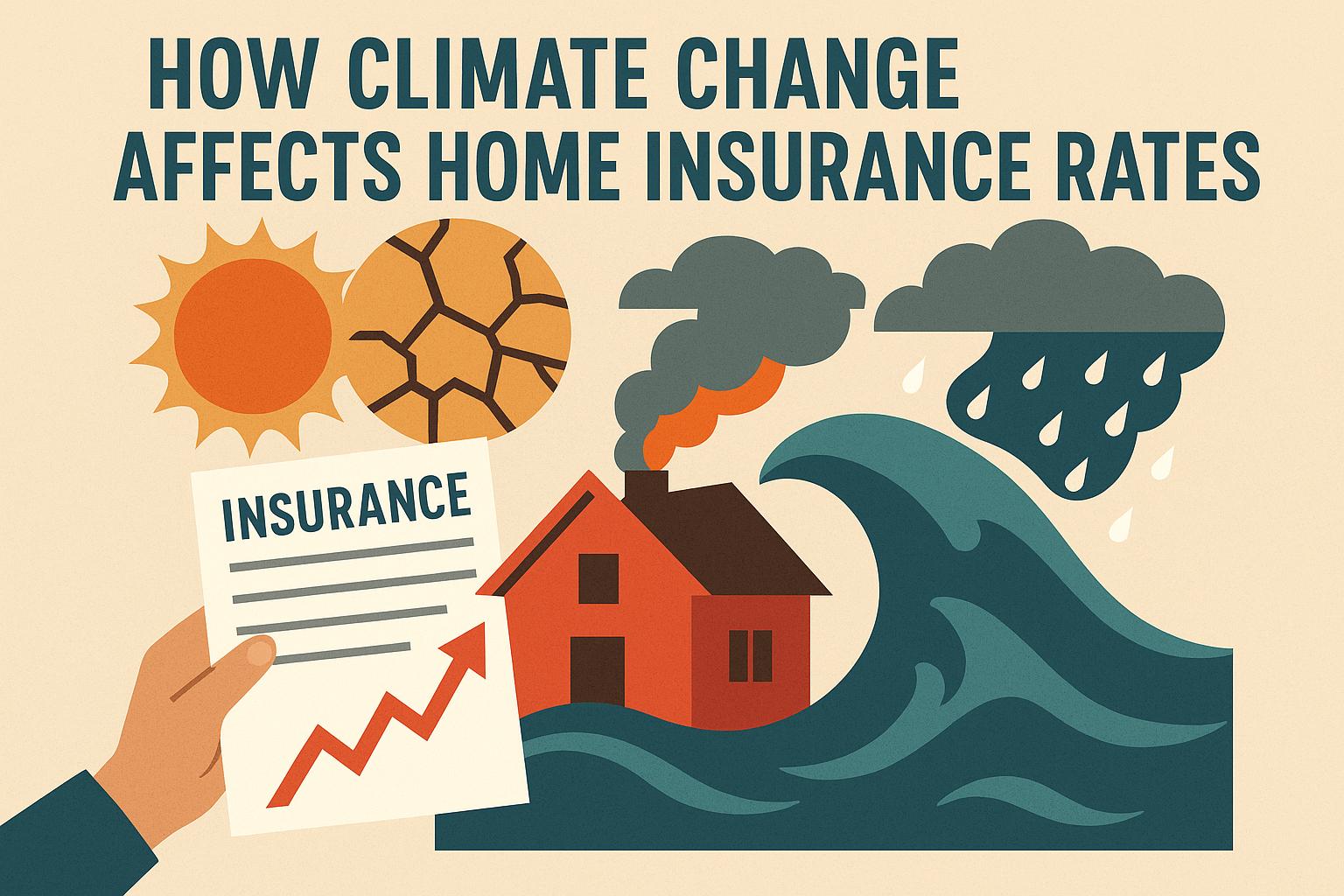
Understanding the Link between Climate Change and Home Insurance
Climate change has become a significant factor influencing various aspects of daily life, including financial considerations such as home insurance. Home insurance rates, which protect homeowners from losses related to natural disasters and accidents, are increasingly affected by the impacts of climate change.
Increased Frequency of Natural Disasters
One of the primary ways climate change affects home insurance is through the increased frequency and severity of natural disasters. Events such as hurricanes, wildfires, floods, and other extreme weather conditions have become more common. According to the United Nations, climate change is likely to lead to even more intense weather events in the future. Insurers must account for these higher risks, often resulting in increased premiums for homeowners.
Rising Costs for Insurers
As natural disasters occur more frequently, insurers face higher costs due to increased claims. The need to pay out more claims can result in tightened underwriting practices and higher insurance rates for customers. To compensate for these risks, insurers might also reduce coverage or increase deductibles, making it more challenging for homeowners to find affordable protection.
Impact on Underwriting Practices
Underwriting is the process insurers use to evaluate risk and determine appropriate rates for policyholders. Climate change necessitates a reevaluation of traditional underwriting models. For instance, properties located in high-risk areas, such as coastal regions vulnerable to flooding or areas prone to wildfires, might experience significant changes in their home insurance policies. Insurers may employ more sophisticated models and data analytics to better assess the risks associated with climate change.
Geographical Variations in Insurance Costs
The impact of climate change on home insurance rates is not uniform across all regions. Areas more susceptible to climate-related risks may face steeper increases in insurance premiums. For example, coastal regions might see higher costs due to the increased risk of hurricanes, while arid areas may face rising rates due to wildfire risks. This variation highlights the need for homeowners to be informed about potential climate risks specific to their locations.
Adaptation Strategies for Homeowners
Given the influence of climate change on home insurance, homeowners can adopt several strategies to mitigate potential risks and manage insurance costs. Enhancing property resilience, such as installing storm shutters or fire-resistant materials, can help reduce the risk of damage and potentially lower insurance premiums. Homeowners can also seek coverage options that specifically address climate-related risks, ensuring they have adequate protection.
Additionally, staying informed about evolving climate risk assessments and updates from insurance providers is crucial. Engaging with policymakers and supporting community adaptation measures can also contribute to broader mitigation efforts against climate change impacts.
Technology and Innovation in Insurance
The insurance industry is increasingly relying on technology and innovation to better address the challenges posed by climate change. Advanced data analytics allows insurers to better predict and model the risks associated with natural disasters. This technological progression aids in the formulation of more precise underwriting practices and individualized insurance products. Such innovations help in mitigating the financial impacts on both insurers and homeowners and contribute to the development of solutions tailored to modern challenges.
Role of Data Analytics
Data analytics plays a crucial role in reshaping the insurance landscape. By leveraging big data and machine learning, insurers can analyze trends and patterns related to climate change more effectively. This allows for improved risk assessment and the creation of more relevant insurance products, helping homeowners access better protection in the face of increasing climate-related threats.
Smart Home Technology
The adoption of smart home technology can also play a significant role in mitigating risks associated with climate change. Sensors and interconnected devices can monitor home conditions and provide real-time alerts on potential threats such as fires or flooding. Integrating such technology into homes not only provides enhanced security but can also influence insurance premiums positively, as homes with advanced monitoring capabilities are perceived as lower risks by insurers.
Policy and Community Engagement
Beyond individual actions, a comprehensive approach involving policy and community engagement is essential to addressing the intertwined issues of climate change and home insurance. Policymakers, insurers, and communities must collaborate to craft solutions that consider both economic and environmental sustainability.
Government Role
Governments can play a pivotal role by implementing policies that promote sustainable practices and provide incentives for homeowners to adopt environmentally friendly measures. By supporting research into climate change and offering subsidies for renewable energy installations, governments can help mitigate the impacts on home insurance.
Community-Based Initiatives
Communities can undertake collective measures to improve resilience against climate change. Initiatives such as community firebreaks, shared resources for flood defenses, and local climate adaptation plans can significantly reduce the risks faced by individual homeowners. By fostering a sense of community support and shared responsibility, neighborhoods can become better equipped to handle climate-related challenges.
Long-Term Financial Planning
Understanding the financial implications of climate change on home insurance is a crucial aspect of long-term financial planning for homeowners. Taking proactive steps can provide economic benefits and peace of mind in the face of uncertainty.
Investment in Resilience
Investing in measures that enhance the resilience of homes to withstand extreme weather events can be financially beneficial in the long run. Although implementing such measures may require an initial investment, the potential savings on insurance premiums and reduced damage costs can offset these expenditures. Homeowners can benefit from consulting with financial advisors to tailor solutions uniquely suited to their circumstances and geographic area.
Future Planning
Engaging in future financial planning includes analyzing the potential impacts of climate risks on real estate values. Areas susceptible to adverse climate events may experience fluctuating property values, influencing decisions related to buying, selling, or investing in real estate. Becoming well-versed in potential risks enables homeowners to make educated decisions that preserve their long-term financial health.
Conclusion
Climate change continues to reshape the landscape of home insurance, leading to evolving strategies by both insurers and homeowners. Understanding the connection between increased natural disasters, rising insurance costs, and regional variations is essential for homeowners to make informed decisions about their insurance needs. By adopting proactive measures and staying informed, homeowners can better navigate the challenges presented by climate change in the realm of home insurance. Embracing technology, engaging in community initiatives, and considering long-term financial plans are vital steps in cultivating resilience against the ongoing impacts of climate change.